

Britain Has a Sleep Problem — And It Is Getting Worse
Sleep deprivation is no longer a niche concern in the UK. A 2026 nationwide survey found that only 27.9% of British adults regularly achieve the recommended minimum of seven hours per night, and just 14.3% wake up feeling consistently refreshed. Around one third of UK adults report insomnia symptoms every week, including difficulty falling asleep, frequent night waking, or rising too early without feeling rested. The Mental Health Foundation has described Britain as averaging just three good nights of sleep per week.
Against that backdrop, the interest in natural, non-pharmaceutical sleep support has grown significantly. Aromatherapy is one of the most accessible options available — and unlike many popular wellness interventions, it has a meaningful and growing body of clinical evidence supporting it, particularly for specific essential oils used consistently in the hour before sleep.
This guide covers which oils have the strongest evidence, why a waterless diffuser is the most effective delivery method, and how to build a simple routine that actually makes a difference.
Quick Reference: Best Essential Oils for Sleep at a Glance
Not ready to read everything right now? Here is the short version:
|
Essential Oil |
Best For |
|
Lavender |
Falling asleep faster, improving overall sleep quality |
|
Bergamot |
Racing thoughts and evening anxiety |
|
Chamomile |
Gentle sedation, combining with lavender for deeper effect |
|
Cedarwood |
Physical restlessness, grounding and body relaxation |
|
Ylang Ylang |
Tension, elevated heart rate, physical wind-down |
For the full evidence and practical guidance on each oil, read on. Or explore the complete Scandiscents sleep oil range directly.
Why Delivery Method Matters More Than Most People Realise
Before exploring which oils to use, it is worth understanding why how you diffuse an oil matters as much as which oil you choose. The therapeutic effect of inhaled essential oils depends entirely on aromatic molecules reaching the olfactory system and travelling from there directly to the limbic system — the area of the brain governing emotion, memory, and the sleep-wake cycle.
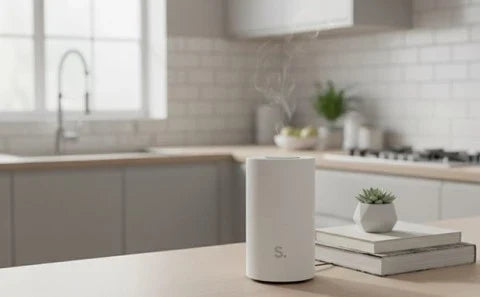
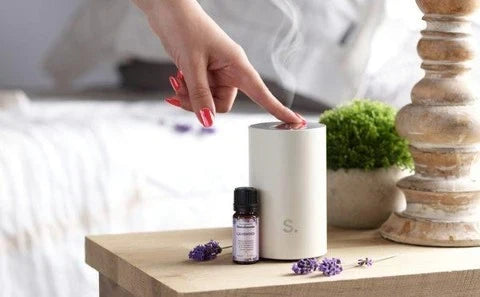
A waterless cold-air diffuser achieves this more effectively than any other domestic method. Because oil is atomised in its pure, undiluted state — without water to dilute it or heat to alter its chemical composition — every aromatic compound reaches the air, and subsequently the nose, at full concentration. The Scandiscents Halo Home Diffuser is designed around exactly this principle: continuous, consistent, room-filling diffusion that closely mirrors the inhalation conditions used in most clinical aromatherapy trials.
💡 "I've been using the Halo diffuser daily and it has become a genuinely integral part of my evening routine. Quiet operation matters enormously at bedtime — and lavender in the evening is noticeably more effective in the Halo than with ultrasonic diffusers I've used previously." — Verified UK customer
💡 Most sleep studies using aromatherapy diffuse oil for 30 to 60 minutes in the period before bed, not overnight. Starting the diffuser during your wind-down routine — rather than leaving it on all night — reflects what the research actually shows is effective.
The Essential Oils With the Strongest Evidence for Sleep

Lavender — The Most Researched Oil for Sleep
Lavender is by far the most clinically studied essential oil for sleep, and the evidence for it is genuinely strong. A 2026 systematic review and meta-analysis published in Holistic Nursing Practice, which examined eleven randomised controlled trials involving 628 adult participants, concluded that lavender essential oil inhalation consistently improves sleep quality in adults. Separate RCTs have linked lavender inhalation to shorter time-to-sleep, longer total sleep duration, and reduced night waking — with benefits appearing within one to two weeks of consistent nightly use.
The mechanism is understood at a biochemical level: lavender's primary active compounds, linalool and linalyl acetate, modulate GABA receptors in the brain — the same receptors targeted by many prescribed sleep medications, but at a significantly lower potency and without the dependency risk. They also appear to reduce cortisol and slow heart rate, supporting the body's shift into a parasympathetic, rest-ready state.
Scandiscents' Lavender Essential Oil is 100% pure Lavandula angustifolia — the specific species used in the majority of clinical research.
In short: Lavender is the single best essential oil for sleep, backed by the strongest clinical evidence of any oil. It is the natural first choice for anyone new to sleep aromatherapy.
Bergamot — For Anxiety-Driven Sleeplessness
For many UK adults, the core sleep problem is not the inability to fall asleep once the mind settles — it is the inability to settle the mind in the first place. Bergamot is particularly well suited to this pattern. Its linalool content gives it a similar biochemical mechanism to lavender, but its citrus character adds a mood-lifting quality that helps ease anxious or ruminative thinking before bed. Studies have linked bergamot inhalation to reduced evening stress and improved perceived sleep quality. The Calming blend — which combines bergamot with French lavender and ylang ylang — is designed around exactly this profile.
In short: Bergamot is the best choice when racing thoughts, worry, or evening stress are the main barrier to sleep — rather than physical tiredness.
Chamomile — GABA Receptor Support
Roman chamomile contains apigenin, a compound that binds to GABA receptors in the brain and exerts a gentle sedative effect — the same biochemical pathway as benzodiazepine medications, but at a fraction of the potency. The evidence for inhaled chamomile is somewhat less robust than for lavender, but a randomised controlled trial on lavender and chamomile combined found statistically significant improvements in depression, anxiety, and sleep quality scores immediately after the intervention period, with gains sustained one month later. It is an especially useful oil for those who find lavender alone insufficient.
In short: Chamomile is a strong second choice, particularly when layered with lavender. It works through a slightly different pathway and the combination appears more effective than either oil alone.
Cedarwood — Grounding and Deeply Calming
Cedarwood essential oil's primary active compound, cedrol, has been shown to reduce autonomic nervous system arousal — slowing heart rate and supporting the shift from sympathetic (alert) to parasympathetic (resting) function. Research links inhaled cedrol to increased heart rate variability, a reliable physiological marker of relaxation. Cedarwood pairs particularly well with lavender: three drops of lavender and two drops of cedarwood diffused 30 minutes before bed is one of the most consistently recommended combinations across recent sleep aromatherapy research. Both are available in the Scandiscents essential oils range.
In short: Cedarwood is the best oil for physical restlessness and those who need a heavier, more grounding presence than lavender alone provides. Blend with lavender for the strongest combined effect.
Ylang Ylang — For Physical Tension
Where lavender and bergamot work primarily on the cognitive and emotional dimensions of sleep, ylang ylang targets the physical. Studies have linked inhalation to measurable reductions in blood pressure and salivary cortisol — particularly useful for those whose sleep difficulty is expressed as physical restlessness or tension rather than anxious thinking. It features in the Relax & Unwind blend, alongside bergamot and lemongrass, making it one of the more complete wind-down options in the range.
In short: Ylang ylang works best for those who feel physically wound up at bedtime — tense muscles, elevated heart rate — where the problem is in the body rather than the mind.
Building an Effective Evening Routine
The research on aromatherapy and sleep consistently suggests that consistency and timing matter more than quantity. A few practical principles:
• Diffuse for 30 to 60 minutes before your intended sleep time, not continuously overnight
• Use the lowest intensity setting on the Halo and allow the scent to fill the room gradually
• Repeat the same routine nightly for at least two weeks before evaluating the effect — most trials that showed a benefit ran for 14 to 30 nights
• Pair diffusion with other wind-down habits: dimmed lighting, no screens, a consistent bedtime — the oil works as part of a cue-based routine, not in isolation
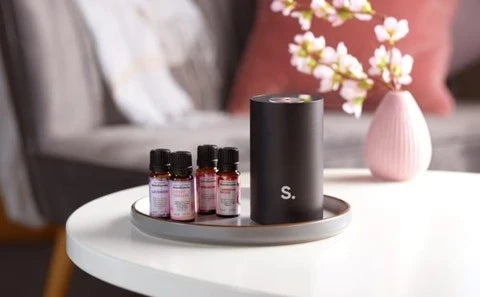
For a ready-made starting point, the Sleepy Trio Complete Kit pairs the Halo Diffuser with three purpose-formulated evening blends — Sweet Dreams, Cosy Night In, and Relax & Unwind. One verified customer described setting the Halo to its lowest setting 30 minutes before bed and drifting off easily every night — and noted she no longer needs to worry about switching it off thanks to the built-in timer. That is precisely the kind of low-effort, consistent routine the research points to.

Aromatherapy is a genuine, evidence-informed sleep tool — not a cure for chronic insomnia. The research is clearest for mild to moderate sleep difficulties, particularly those linked to anxiety, stress, or an inconsistent wind-down routine. If sleep problems are severe, persistent, or linked to an underlying health condition, speaking to a GP is the appropriate first step.
This article is for general information only and does not constitute medical advice. If you experience persistent sleep difficulties, please speak to your GP or a qualified healthcare professional.
Frequently Asked Questions
Do essential oils really help with sleep?
Yes, for many people and for specific oils. The evidence is strongest for lavender, which has been examined in eleven randomised controlled trials involving over 600 adult participants, with consistent findings of improved sleep quality, shorter time-to-sleep, and reduced night waking. The effect is modest rather than dramatic, and works best as part of a consistent nightly routine rather than as a one-off intervention. Other oils — bergamot, chamomile, cedarwood, ylang ylang — have supporting evidence through related mechanisms such as anxiety reduction and autonomic nervous system calming.
What is the best essential oil for sleep?
Lavender is widely considered the best essential oil for sleep based on the volume and consistency of clinical evidence. Specifically, 100% pure Lavandula angustifolia — the species used in most research studies — is the recommended choice. Scandiscents' Lavender Essential Oil is 100% pure and free from additives or carrier oils, making it directly comparable to the oil used in the trials.
What essential oils help with anxiety and sleep?
For sleep difficulties caused primarily by anxiety, racing thoughts, or evening stress, bergamot is the strongest choice alongside lavender. The Calming blend — which combines bergamot, French lavender, and ylang ylang — is specifically formulated for this profile. Chamomile is also worth considering, as it acts through GABA receptors in the brain to produce a gentle calming effect that complements lavender's action.
How long does it take for essential oils to improve sleep?
Most clinical trials that showed a measurable benefit ran for between 14 and 30 consecutive nights. In practice, many people notice an effect within the first week, but the strongest and most consistent results come from making it a fixed nightly habit rather than using it occasionally. Expect to give any new routine at least two weeks before forming a view on whether it is helping.
Can I leave my diffuser on all night?
The research does not support overnight diffusion as the most effective approach — most studies used 30 to 60 minutes of pre-sleep inhalation rather than continuous overnight use. The Halo's built-in timer settings make it straightforward to set a fixed window before bed and let it switch off automatically, which is both more evidence-aligned and more practical than running it through the night.
Is a waterless diffuser better than an ultrasonic one for sleep?
Yes, for several reasons. A waterless diffuser disperses pure, undiluted oil at full concentration, which means the aromatic molecules that reach the nose — and from there the limbic system — are not weakened by water dilution. The Halo is also considerably quieter than most ultrasonic devices, operating at 30dB — an important factor for bedroom use, where any mechanical noise can disrupt light sleep. Read our full comparison: Comparing Waterless Diffusers with Water-Based Diffusers.
Explore the full Scandiscents sleep oil range — including pure lavender, essential oil blends, and complete diffuser kits — at scandiscents.com/collections/sleep. For a companion guide on the science behind aromatherapy and anxiety, read: Natural Anxiety Relief at Home: The Science Behind Aromatherapy and Stress.

Leave a comment
This site is protected by hCaptcha and the hCaptcha Privacy Policy and Terms of Service apply.