
Walk down the oils aisle of any homeware shop or scroll through an online diffuser store, and you'll see two labels sitting side by side: “essential oil” and “fragrance oil.” They smell similar, they're bottled in a similar way, and they're often priced within a few pounds of each other - so it's easy to assume they're interchangeable. They're not. The difference between them affects everything from how they're made to whether they're safe to use on your skin, and understanding it will help you buy the right oil for what you actually want it to do.

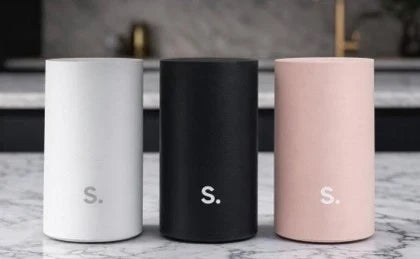
The Scandiscents Halo Home Diffuser, available in white, black and pink - the vessel for both essential oils and fragrance oils alike.
What Is an Essential Oil?
An essential oil is a concentrated liquid extracted directly from a plant - its leaves, peel, flowers, bark, roots or resin, depending on the species. Producers typically use steam distillation or cold pressing to draw out the aromatic compounds without introducing anything synthetic. The result is an oil that carries the plant's own naturally occurring chemistry: lavender oil contains linalool and linalyl acetate; citrus oils are rich in limonene; eucalyptus is dominated by cineole.
Because nothing is added, the scent, colour and even the exact chemical make-up of an essential oil can vary slightly from batch to batch, depending on where and when the plant was grown. This natural variation is one of the clearest signs you're dealing with a genuine essential oil rather than a manufactured one.

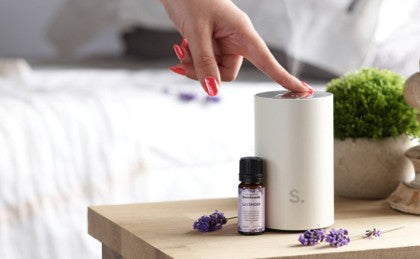
Scandiscents' 100% Pure Essential Oil range - Lemon, Rosemary and Lavender - alongside the Halo Home Diffuser.
What Is a Fragrance Oil?
A fragrance oil, by contrast, is a formulated scent. Perfumers and chemists combine aroma compounds - which may be synthetic, nature-identical, or a blend of natural extracts and synthetics - to create a specific, repeatable smell. This is what makes fragrance oils so versatile: they can recreate scents that no single plant could ever produce, such as “cotton fresh,” “vanilla latte” or “ocean breeze.”
There is nothing inherently inferior about a well-made fragrance oil. Many are produced to strict international standards (IFRA-compliant, for example) and are perfectly safe for their intended use in candles, diffusers or room sprays. What they don't offer is the naturally occurring therapeutic chemistry found in a true essential oil, because they aren't derived from a single plant source in the same way.

Scandiscents' Premium Fragrance Oil range - Arctic Pine, Nordic Waterfall, Swedish Cherry Blossom, Northern Lights and Nordic Frost - formulated scents inspired by nature.
The Key Differences at a Glance
|
Essential Oil |
Fragrance Oil |
|
|
Source |
Extracted directly from a plant (leaf, peel, flower, wood, resin) |
Formulated in a lab, often blending synthetic aroma compounds with some natural elements |
|
Extraction method |
Steam distillation, cold pressing or CO2 extraction |
Chemical synthesis and compounding |
|
Scent range |
Limited to what nature produces - earthy, herbal, citrus, floral |
Virtually unlimited - can replicate scents that don't exist in nature, such as 'clean linen' or 'sea breeze' |
|
Therapeutic properties |
Contains naturally occurring compounds (linalool, limonene, etc.) studied for effects on mood and relaxation |
Formulated purely for scent; not intended to offer therapeutic benefit |
|
Consistency |
Varies slightly batch to batch depending on harvest, climate and soil |
Highly consistent scent from batch to batch |
|
Typical price |
Higher - reflects the volume of plant material required |
Generally lower to produce at scale |
|
Best suited to |
Aromatherapy, wellness routines, natural skincare |
Home fragrance, candles, room sprays, novelty scents |
Why the Two Get Confused
Part of the confusion comes down to labelling and marketing. Terms like “natural fragrance,” “essential oil blend” and “pure oil” are used loosely across the industry, and not every country regulates them in the same way. A bottle described as a “blend” might contain genuine essential oils diluted with a carrier, or it might be a fragrance oil with a small percentage of natural extract added for marketing appeal. The only reliable way to know what you're buying is to check the ingredients list rather than the front-of-bottle description.

Scandiscents' perfume-inspired fragrance oils - a good example of how fragrance oils recreate familiar designer scents that no single plant could produce.
Is One “Better” Than the Other?
Neither oil is universally better - they simply do different jobs. If your goal is to fill a room with a specific, consistent, long-lasting scent - say, a festive cinnamon-and-orange blend at Christmas, or a signature “cosy home” fragrance - a well-made fragrance oil like Fresh Linen will often perform more reliably and cost less than sourcing the equivalent from raw plant material. If your goal is aromatherapy in the traditional sense - using scent as part of a relaxation, sleep or mood routine, or applying oil to the skin diluted in a carrier - a genuine essential oil such as Lavender is the appropriate choice, because it's the one that carries the naturally occurring compounds associated with those effects.
Are Fragrance Oils Safe to Use?
Used as intended - in a diffuser, wax melt or room spray, at the recommended dilution - reputable fragrance oils are safe for home fragrance purposes. Where care is needed is on skin. Fragrance oils are not formulated for topical or therapeutic use, and applying them directly to the skin can cause irritation in a way that a correctly diluted essential oil typically wouldn't. Always check the manufacturer's guidance before using any oil on the body, and patch test first if you're trying something new.
How to Read the Label Properly
- Look for the botanical (Latin) name - a genuine essential oil will list it, e.g. Lavandula angustifolia.
- Check for the word “parfum” or “fragrance” on the ingredients list - this is the industry term for a formulated fragrance compound.
- Be wary of vague blend names with no botanical detail - these are almost always fragrance oils.
- If therapeutic use matters to you, look for oils that state their extraction method (steam distilled, cold pressed) - fragrance oils won't, because they aren't extracted from a single source.
Which Should You Choose for Your Diffuser?
The good news is you don't have to choose just one. The Scandiscents Halo waterless diffuser is designed to work beautifully with both essential oils and fragrance oils, so it's entirely up to what you fancy on the day - simply unscrew one 10ml bottle and twist in another. If you're diffusing for a calming evening routine, a pure essential oil such as Lavender, bergamot or geranium is the natural choice. If you simply want your living room to smell wonderful during a dinner party, a beautifully blended fragrance oil like Fresh Linen will do the job just as well - and often for longer, since fragrance oils are formulated for throw and longevity.
Your Questions Answered
Which tends to smell stronger in the Halo?
It depends on the oil, but as a general rule, fragrance oils are formulated specifically for diffusion, so they tend to atomise more predictably and often deliver a bolder, more consistent scent throw than essential oils, which vary naturally from batch to batch. That said, well-blended essential oil combinations still perform impressively in the Halo - it's less about which category wins and more about the specific oil.
Which tends to last longer?
Both essential and fragrance oils last roughly the same length of time in the Halo: a single 10ml bottle typically runs for up to 110 hours on the lowest setting, which works out to around 40 days if you diffuse for three hours a day. Because fragrance oils diffuse a little more predictably, some people find the scent feels like it lasts longer, even though the bottle itself empties at a similar rate.
Can customers switch between fragrance and essential oils in the same diffuser?
Yes, absolutely. The Halo diffuser accepts any standard 10ml bottle, so you can move freely between essential oils and fragrance oils depending on your mood, the room or the time of day - there's nothing stopping you from running Lavender at night and Fresh Linen during the day.
Does the diffuser need cleaning between different oils?
No. Because the Halo is a genuinely waterless diffuser, there's no water tank to harbour mould or residue between switches. To change scent, simply unscrew the bottle you're using and twist in the next one - no rinsing, no drying, no faff.
Which oils do Scandiscents customers tend to use in bedrooms vs living rooms?
Bedrooms tend to favour calming, sleep-focused oils - Lavender or a blend like Relax & ; Unwind (bergamot, lavender and lemongrass) are popular choices for the thirty to sixty minutes before bed. Living rooms and open-plan spaces, which need to fill a larger area, often lean towards fresher, more sociable scents such as Fresh Linen or a citrus fragrance oil that can hold its own across a bigger room - the Halo covers up to 80m², so it's more than capable either way.
Why would someone choose Lavender Essential Oil rather than Fresh Linen Fragrance Oil?
It comes down to what you want the oil to do. Choose Lavender if you want a genuine aromatherapy routine - it carries naturally occurring linalool and linalyl acetate, compounds researched for their effect on sleep and relaxation. Choose Fresh Linen if you simply want your home to smell like freshly laundered sheets, with no expectation of a therapeutic effect - it's a scent no plant could ever actually produce.
Do fragrance oils and essential oils diffuse differently in a waterless diffuser?
Not mechanically. Both are atomised in their pure, undiluted state by the same cold-air technology, with no water or heat involved at any point. The real difference lies in the oil itself, not the diffuser: essential oils carry naturally variable plant compounds that can shift subtly between batches, while fragrance oils are engineered for a highly consistent, repeatable throw every single time.
The Bottom Line
Fragrance oils and essential oils aren't rivals - they're different tools for different purposes. Essential oils are unprocessed extracts of a single plant, carrying its natural chemistry and, with it, the properties studied in aromatherapy. Fragrance oils are engineered scent compounds, built for consistency, versatility and value. Once you know what you're actually buying, choosing between them becomes far simpler: ask yourself whether you want a specific therapeutic experience, or simply a beautiful smell - and let that decide which bottle goes in your basket.
Ready to build your own collection? Browse the full range of essential and fragrance oils, or pick up the Halo Home Diffuser to get started with either.


Leave a comment
This site is protected by hCaptcha and the hCaptcha Privacy Policy and Terms of Service apply.